Japan Book Club: The Narrow Road to the Deep North – Preread
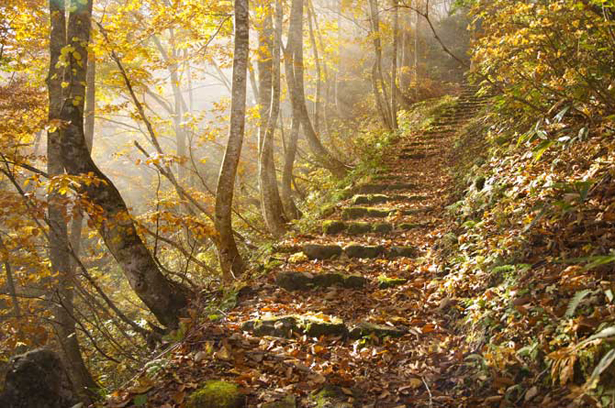
I don't know about you, but I'm looking forward to walking in Basho's footsteps.
I sincerely hope that everyone enjoyed the last selection from our Japan book club – The Big Wave by Pearl S. Buck. While The Big Wave was a fantastic book on it’s own, it was an appreciation for and understanding of the Japanese people that we hoped everyone would take away from the reading. Many people were understandably nervous about traveling to Japan after the tragic events of the tsunami and earthquake in March, but after reading The Big Wave, we hope that many of your questions have been answered. As shown in the story, the Japanese people are resourceful and resilient and will rebuild their country quickly, never forgetting the past, but always looking to the future.
Now, for our second book club selection, we’ll turn an eye towards Japans proud history, way back to the Edo Period and a famous poet named Basho. Read more…
Japan Book Club: The Big Wave – 5
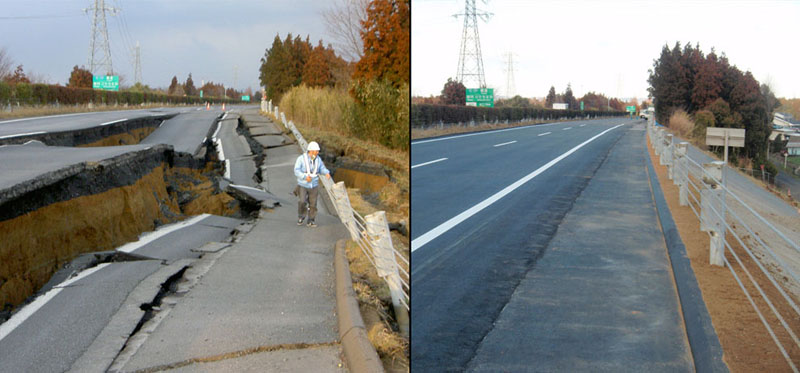
To give you an idea of how the Japanese people work... The picture on the left is March 12, 2011 - the day after the earthquake. The picture on the right is just 6 days later.
This week you should finish The Big Wave.
Pearl S. Buck wrote The Big Wave more than 70 years before the 2011 earthquake and tsunami in Japan, yet there are so many similarities between what happened in the book and what happened in real life.
Often times “life imitates art,” which means that things often happen in real life just they way they’ve happened in a story, a book, a play, or a movie. This might be one time when it’s true. Read more…
U.S. TAPpular Field
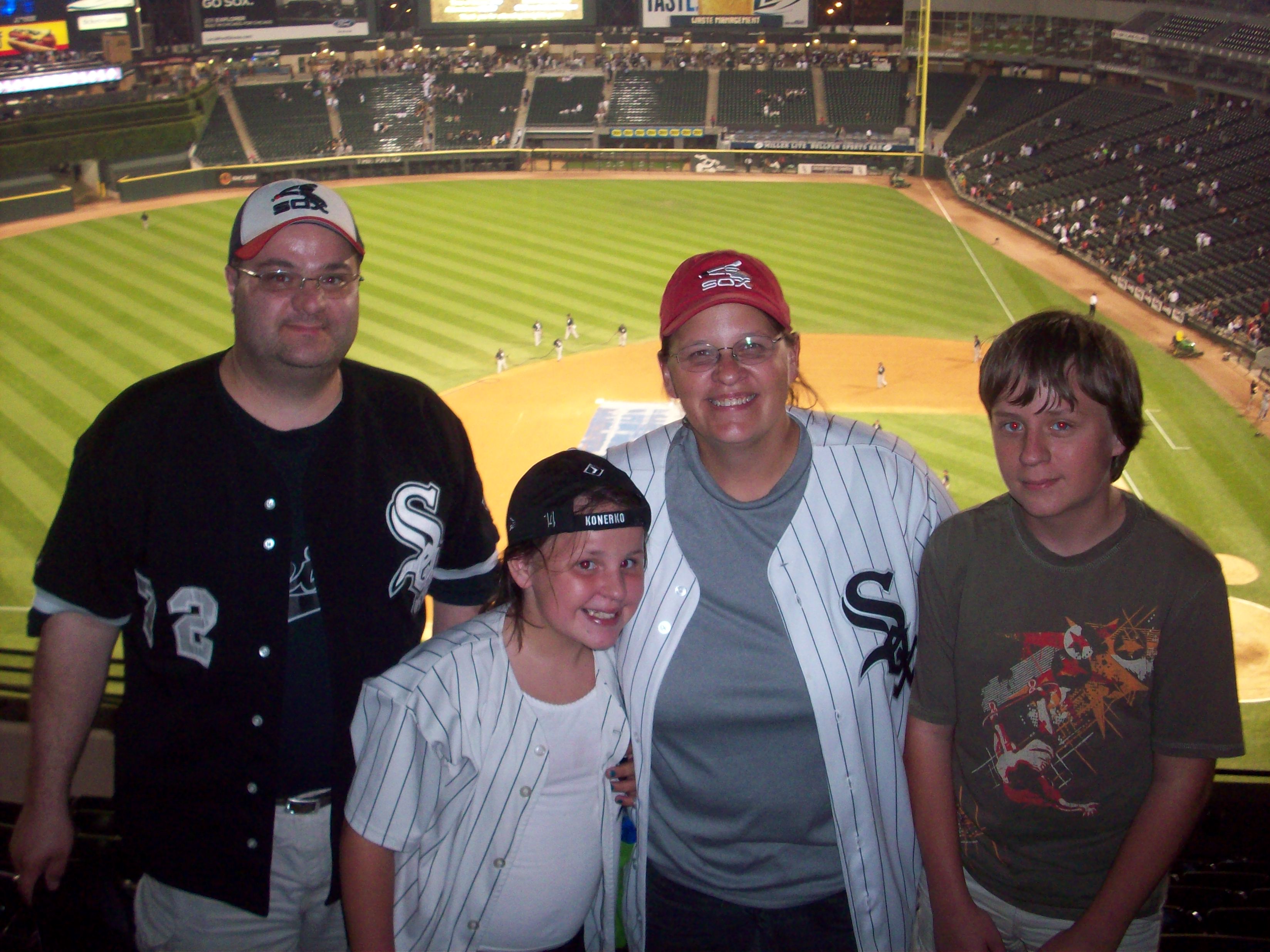
The Trouvais family helped set this whole thing up, so they get to be the first pic in this post.
TAP has been all over the world. We’ve climbed a mountain in the Bavarian Alps, we’ve cruised around the Mediterranean Sea, we’ve walked through a WWII concentration camp, watched prayer time in a Turkish mosque, wandered the marketplace in Africa, sat in a bull fighting ring, held a meeting on a beach in Portugal, stood next to Big Ben, listened to a band in a real Irish Pub, and even gazed up at the ceiling in the Sistine Chapel.
This week, however, TAP took it’s shortest trip yet. About 40 of us took that long trek up I-55 to watch the Chicago White Sox take on the Cleveland Indians at Comiskey Park – sorry, I can’t get into that phone company name (and just so you know, in my mind it’s still the Sears Tower, and it always will be). Read more…
Japan Book Club: The Big Wave – Part 4
 This week I want you to read until around page 46 (at least that’s the page number in my book). Stop when you get to the section that says, “Time passed. Jiya grew up in the farmhouse…”
In this section of The Big Wave, Jiya is put in a difficult position. After his village is destroyed and his family killed, a rich old gentleman offers to adopt him. With Old Gentleman, Jiya would have everything he’d ever need – a beautiful home, riches, the best education… however, when it comes time to decide, Jiya chooses to live with Kino’s poor family – selecting a life of hard work, no money, and wondering if there will be enough food for everyone. Read more…
Japan Book Club: The Big Wave – Part 3
 In Pearl S. Buck’s novel, The Big Wave, a young Japanese boy named Jiya has just survived a horrible tragedy, but the difficult times have just begun for him. After losing his whole family and the village he lives in to the tsunami, his body, mind, and heart all have a lot of healing to do.
Read until Jiya and Kino leave the farm to visit the old gentleman’s castle. Stop when the boys arrive at the castle. (In my book this is on page 40).
This time your assignment has two parts. Read more…
Japan Book Club: The Big Wave – Part 2
 For this section, read The Big Wave up to the lines “Yes,” his father replied, “I have always wanted another son, and Jiya will be that son. As soon as he knows that this is his home, then we must help him to understand what has happened.”
In my book, that is on page 24 and there’s a small break after the paragraph. After you’ve read continue on to the assignment below.
In The Big Wave, we just saw Jiya watch his entire village swept away by a tsunami. It’s hard to imagine what he felt as he saw everything he knew and loved be destroyed. Since the author of this book doesn’t let us into Jiya’s mind, spend a little time looking for interviews and stories from survivors of the 2011 Japan tsunami or the 2004 Indonesian tsunami and read their descriptions of the wave, the destruction, the feelings they had, and the aftermath. Reading what they say will help you get inside Jiya’s mind. Read more…
Japan Book Club: The Big Wave – part 1
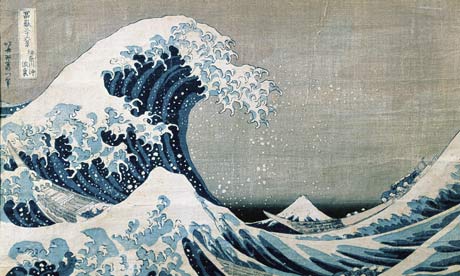
Yup, that sure is a big wave.
We’re hoping that by now everyone has a copy of The Big Wave by Pearl S. Buck. Buck is a very interesting woman, who lived and wrote in many different areas of the world, so we would recommend reading up a little about her life as well as reading her story.
There are several different editions of The Big Wave, and we hope some of you were lucky enough to find a copy with the beautiful illustrations inside, including the one right here on this page by a fantastic Japanese artist named Hokusai.
In some editions of the book, Buck selected a series of prints from Hokusai and Hiroshige, another artist that created wood cut illustrations. These pieces of art add a great deal to the story, so if your copy doesn’t have them in it, be sure to Google those two artists to get a taste of their work. Read more…
Tara Looks at the Tajo
For the first four years of its existence, TAP was cursed. On every trip we had, at least one teacher took a very nasty spill in a very public location. So far on this site, we discussed one of those occasions, and we’ll get to the rest in time. Today, however, is about a day we’re very glad no one fell down, because it would have been a considerable fall. We’re not talking a “trip up the steps” or a “stumble over the curb” or even a “slip on a wet floor” kind of fall – this would have been a full on Wylie Coyote kinda mis-step.
The accident that didn’t happen was in Ronda, which happened to be one of my favorite cities on the trip. Historically, Ronda is loaded with significance. Napoleon and his troops took over the city in the early 1800s during the Peninsular Wars. In the early 1900s, Ronda was a key battle ground during the Spanish Civil War. In literature, Ronda was the setting for a key scene in Ernest Hemingway’s For Whom the Bell Tolls. In that novel, Hemingway depicts a scene as the civil war is unfolding. In Hemingway’s version, rebellious Republicans, fighting against the Fascist bad guys, gather up all the Fascist leaders in a town (maybe Ronda) and one by one beat them and throw them over the cliff.
Hemingway’s story never names Ronda, but legends say that similar events to what were depicted in the book actually happened in Ronda in the early days of the war. Hemingway himself lived (and wrote many of his novels) in Ronda for years. Read more…
These are a Few of My Favorite Things…
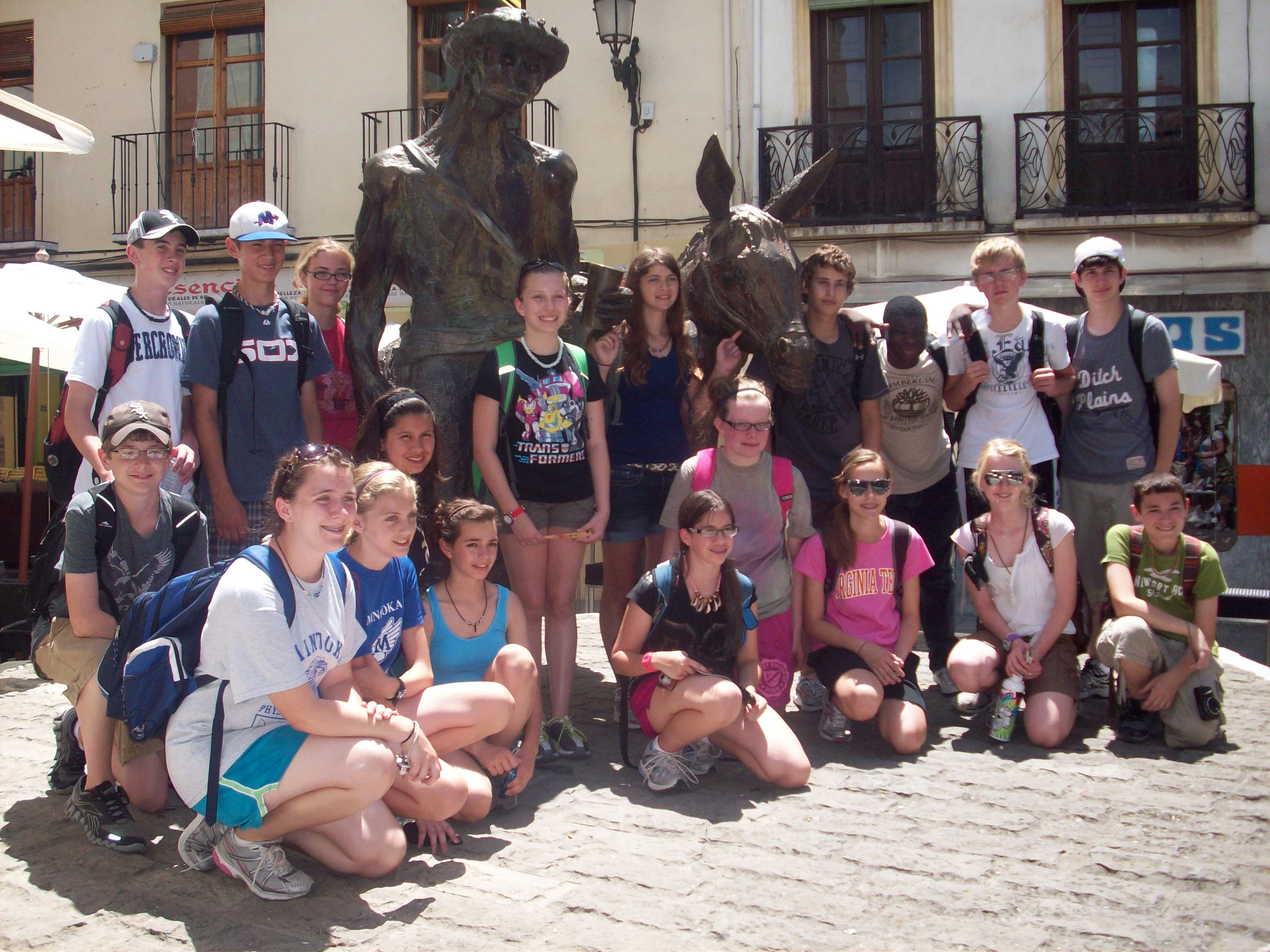
19 Minooka students in Granada, Spain.
There have now been 107 students that have traveled with us on a Minooka TAP trip, and there’s a few things I can guarantee. First, each and every one of those kids, upon returning home from Germany, Greece, Italy, Ireland, or Spain, heard the same question. Second, none of them answered that question the same way. In fact, I bet most of them were asked the question a few times, by different people, and I bet most gave a different answer each time they fielded that particular question.
How do I know they heard the same question? It’s real simple. I happen to be the only person that has been on every single TAP trip, and I’ve heard this question about one gazillion times. At the beginning of each school year when I tell the new 6th graders about TAP – they all ask the question. I was interviewed by the newspaper last night – they asked the question. I went to a Cubs game to be honored for the stuff I do with TAP – the Cubs dude asked the question. I hung out with my parents on the Fourth of July – they both asked the question (my dad doesn’t remember stuff too well, and his hearing isn’t great, so he asked it three times himself). Read more…
Portuguese Cookies (a pastry from Heaven)
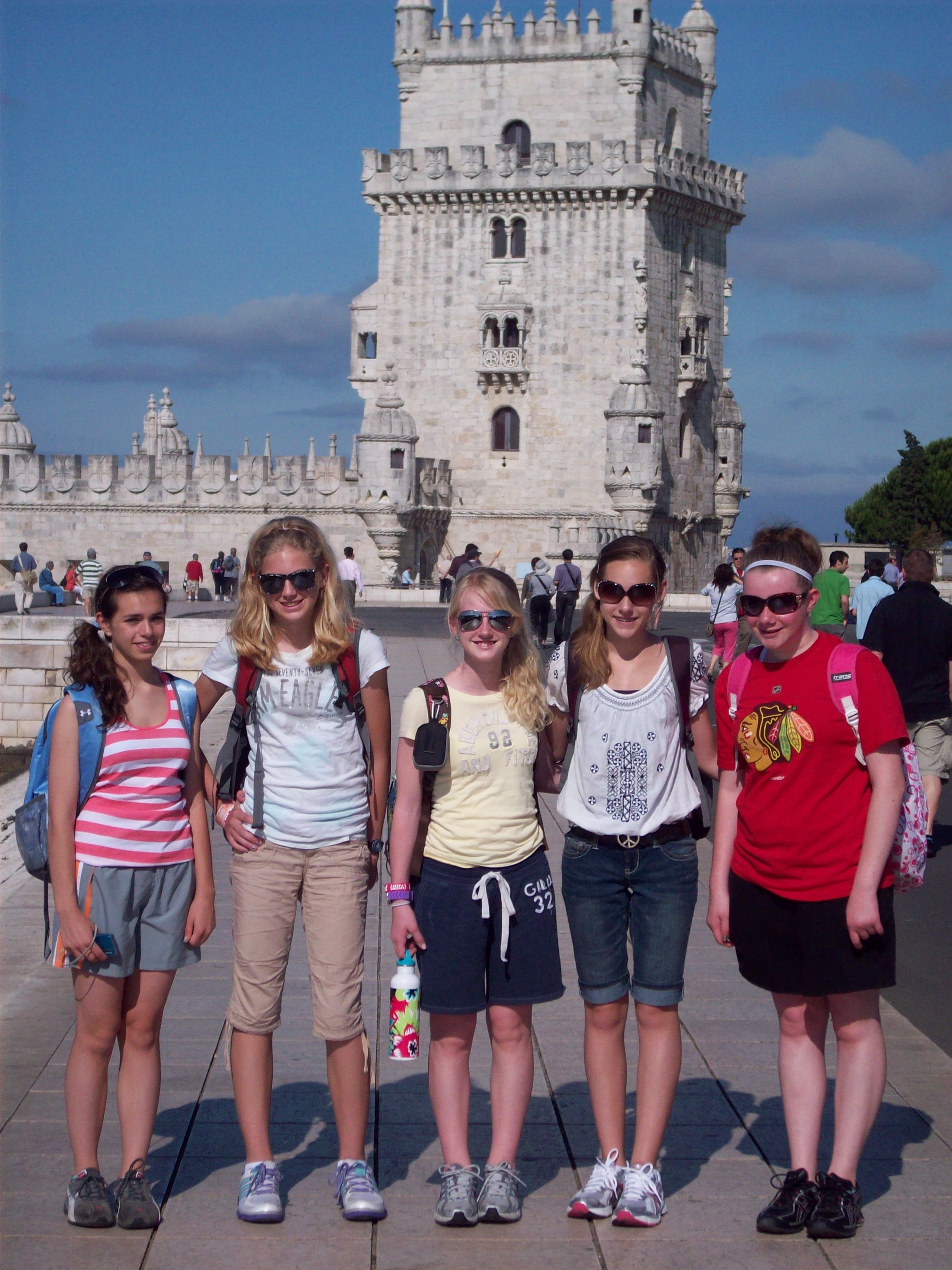
Minooka girls in front of the Belem Tower in Lisbon, Portugal
There are some cultures that are known for their cuisines. Quite a few of the kids getting ready for our Japan trip have asked if we’re going to have sushi while we’re there, and I sure hope we get the chance to try the real thing. Along those lines, we had fish and chips in England, paella in Spain, sausages galore in Germany, Irish stew in Ireland, most of the kids ate their weight in gyros while in Greece, and of course we had tons and tons of pizza in Italy. However, when we planned this trip, knowing we’d have three days in Portugal, none of us knew what to expect from Portuguese cuisine.
The Portuguese are known for those 16th century explorers zipping all over the globe looking for spices, so to guess that the menus would have a seafood theme would have been logical. Portugal’s history is so interlaced with Spain’s, so it wouldn’t have been absurd to infer that the two countries would share some flavors and seasonings. It’s not a very big country, so to predict that there wouldn’t be much beef or lamb, but more pork and chicken seemed to make sense. However, looking back at our favorite culinary delight in Portugal – all of those guesses were waaaaaaaaaay off.
It shouldn’t have been hard to guess. Some simple questions might have led folks in the right direction. There were clues all over the city – talk of Columbus (yes, we know he wasn’t Portuguese), a bridge named after de Gama, a monument to Henry the Navigator, a story about Magellan. But even with those clues staring us in the face, you could have given us a million guesses and none of us ever, not in a gazillion years, would have guessed that the most memorable food we had in Portugal would be… a cookie. More specifically, a cinnamon cookie. Cinnamon being one of those highly sought after spices that sent Portuguese sailors and explorers to the ends of the Earth.
Read more…


 Minooka TAP