England Book Club: The Hound of the Baskervilles – Part 1
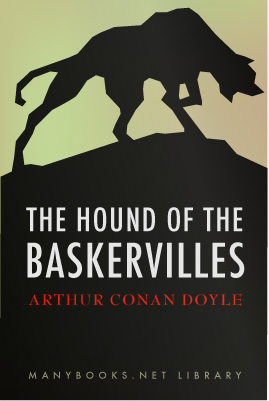
There were a total of four Sherlock Holmes novels and 56 short stories. The Hound of the Baskervilles was the third book. The author, Arthur Conan Doyle, liked to use real crimes or unexplained, almost supernatural ideas as inspiration for Holmes’ mysteries.
The Hound of the Baskervilles is almost the opposite. About 70 years after the most famous Sherlock Holmes story, there were similar stories being told in the Devon and Sommerset regions of England. These stories were also of a mysterious ghost animal that no one could explain. This animal was called The Beast of Exmoor.
Bunraku
Take a look at this video about the Japanese art of Bunraku puppet theater (there’s a second part to watch on YouTube).
The next book we’re reading, The Master Puppeteer, is a mystery that takes place in a Bunraku theater. On top of that, we’ll actually get to see a performance of Bunraku when we’re in Osaka.
After watching the video, use the comments section to tell us what you think about this ancient Japanese art, as well as what you have to say about getting to see it live in just a few months.
Sherlock Holmes

Before we do that, let’s find out a little bit about Holmes, his partner Dr. Watson, and the rest of the characters, the stories, and the settings of the Sherlock Holmes stories.
Japan Book Club: Sadako and the Thousand Paper Cranes – Part 2
This week we’ll finish Sadako and the Thousand Paper Cranes. It’s a short book with a powerful message.
Since this book tells the story of a young girl who was just a toddler when the bomb was dropped on Hiroshima, it’s a different story from the last one we read, Hiroshima.
As you’ll learn in the book, despite appearing healthy immediately after the blast, ten years later, Sadako develops leukemia because of the radiation.
Instead of discussing the decision of dropping the bomb on Japan, and whether or not that was the right move, let’s try to focus on the positive.
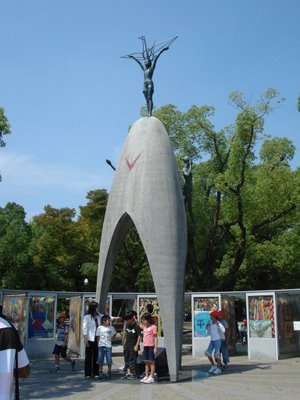
In Hiroshima, there is a statue in the Peace Park to honor Sadako. People from all over the world bring paper cranes to place beneath the statue.
The TAP teachers think it would be nice if we could bring some very nice cranes too. Not the squished, rushed through, kinda ugly ones we made in class last week, but some really nice colorful ones.
Some people even write a message or poem either to Sadako or just to symbolize peace around the world on their paper before folding it into a crane.
Maybe we won’t be able to fold 1,000 cranes, but with 32 students in our group, we should be able to get quite a few.
Your assignment this week is to tell some people Sadako’s story, then ask them to fold a paper crane with you – you can show them how. Get as many as you can. Encourage people to write a message or poem on their paper.
When you’re done, come here and post about the experience. How did people react to you? Were people receptive to your idea? Did anyone write a great poem? How did you convince friends or family members to make paper cranes with you?
England Book Club: The Wind in the Willows – part 6
 This week we’ll read the last two chapters of The Wind in the Willows (Chapter 11 – Like Summer Tempests Came His Tears – and Chapter 12 – The Return of Ulysses).
In chapter 11, Toad finds out that his house has been taken over by Stoats, Weasels, and Ferrets.
In chapter 12, Toad and his friends fight to reclaim Toad Hall.
Japan Book Club: Sadako and the Thousand Paper Cranes – Part 1
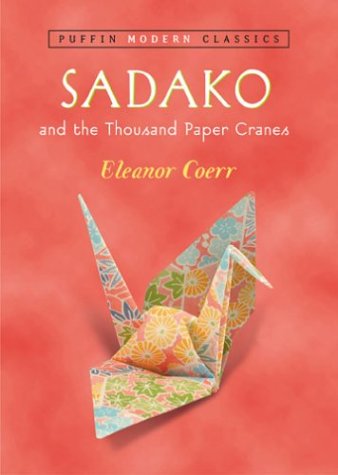 This week we’re starting a new book, Sadako and the Thousand Paper Cranes. This book tells the story of a young girl who was just a toddler when the bomb was dropped on Hiroshima. As you’ll learn in the book, despite appearing healthy immediately after the blast, ten years later, Sadako develops leukemia because of the radiation.
The book isn’t just about the after affects of the bomb, but also teaches a little bit more about the Japanese spirit (kind of like The Big Wave) and about some Japanese mythology.
To completely understand the book, you have to know the story of the Thousand Origami Cranes. So, do a little research on the legend of the paper birds and report back here what you’ve learned.
In your own words, share the legend.
This book is only about 65 pages, and a lot of those are pictures, so we’re only going to take just two weeks to read it. Read as much as you can/want this week. Finish it next week.
England Book Club: The Wind in the Willows – part 5
 This week we’ll read the next two chapters of The Wind in the Willows (Chapter 9 – Wayfarers All and Chapter 10 – The Further Adventures of Toad).
In chapter 9. Rat begins to feel a special kind of stirring in his heart. After meeting the sea rat, our Rat has an intense desire to see the world.
When I was reading the chapter, one particular section stopped me. I don’t know if anywhere in literature I’ve ever seen a more perfect quote to represent TAP. Read the quote:
“Take the adventure, heed the call, now ere the irrevocable moment passes! ‘Tis but a banging of the door behind you, a blithesome step forward, and you are out of the old life and into the new! Then some day, some day long hence, jog home here if you will, when the cup has been drained and the pay has been played, and sit down by your quiet river with a store of goodly memories for company.”
Japan Book Club: Hiroshima – part 5
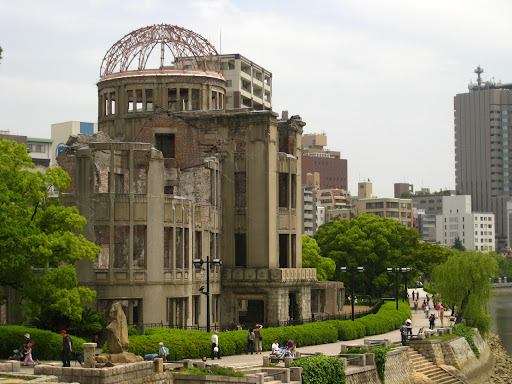
The A-Bomb Dome, a building that partially survived the bombing of Hiroshima.
Chapter five of Hiroshima is called The Aftermath – and it shows how the six survivors lived, where their lives took them, and how the bombing affected the rest of their lives.
Again and again, the survivors have been referred to as “the lucky ones,” but I want you to read this last chapter wondering to yourself if they were in fact lucky.
In the end, I want you to take a look at how each of the characters turned out and how the bombing impacted the rest of their lives.
Read the final section of the book carefully, because the author shows quite a bit of historical framing to show you as the survivors lives go on, affected greatly by the bomb, the rest of the world continues researching, developing, and testing more and more destructive weapons.
It’s been said that nearly 250,000 American soldiers would have died had we continued traditional warfare with Japan, and that it’s likely that 1 million Japanese civilians would have been killed as well. Knowing both sides of things – what did happen (in the book) and what may have happened (read this), answer one question – did we do the right thing when we bombed Hiroshima? Why do you feel that way?
This is a difficult question, so keep all answers and replies to one another civil and respectful. Remember, this is an important conversation to have now, but while we’re in in Japan, we will be nothing but respectful and polite.
England Book Club: The Wind in the Willows – part 4
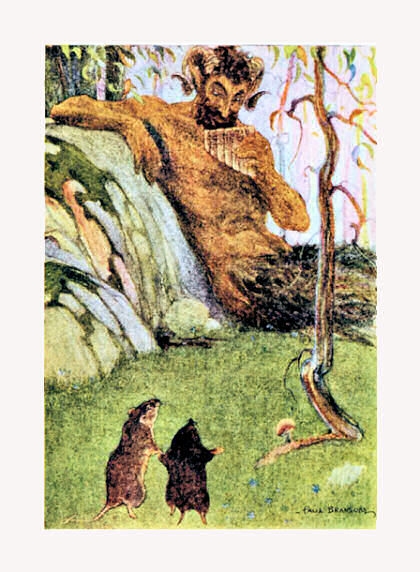 This week we’ll read the next two chapters of The Wind in the Willows (Chapter 7 – The Piper at the Gates of Dawn and Chapter 8 – Toad’s Adventure).
In chapter 6, the animals of the Willows work together to find Otter’s missing son, Portly. In this section of the book, Mole and Rat hear some mystical music (apparently Portly can hear it too). The music has some sort magical quality to it. Anyone who has ever read any Greek Mythology might be reminded of a few stories.
In chapter 8, we start to see a pattern developing. The odd numbered chapters seem to be slower, looking at feelings, while the even chapters are fast-paced and loaded with action. In the 8th chapter, Toad does exactly what we’d expect him to do – he gets himself in some trouble.
Japan Book Club: Hiroshima – part 4
 Chapter four of Hiroshima is called Panic Grass and Feverfew – named after the different types of weeds that have started to grow in Hiroshima.
This chapter follows our six survivors a year after the bombing. In this section, the author refers to these people as “the lucky ones.”
What is happening to the six characters now? Are they really “the lucky ones”?


 Minooka TAP